UPM PH.D. STUDENTS AT PURDUE UNIVERSITY
Andrés and Himpu are two Ph.D. students from Universidad Politécnica de Madrid (UPM) who have been conducting research at Purdue University. Here is their personal experience on how they ended up there and what they have been doing so far:
My name is Andrés and I am a third-year Ph.D. student at Universidad Politécnica de Madrid (UPM). I completed my BSc in Aerospace engineering at the school of aeronautics of UPM, and I specialized in space vehicles with an MSc at the same school. However, by that time I had already begun working at the Department of Applied Mathematics, and I got to develop my master’s thesis on Immersed Boundary Methods for high-order simulations of incompressible flows at Imperial College London within a Marie Curie-funded program. Later, I started working on my Ph.D. research with funding from the Programa Propio Ph.D. program of UPM, mainly focusing on using high-order methods to simulate supersonic flows. In the last few years, I have developed stabilization methods that improve the accuracy and reliability of these algorithms, which led me to this new adventure.
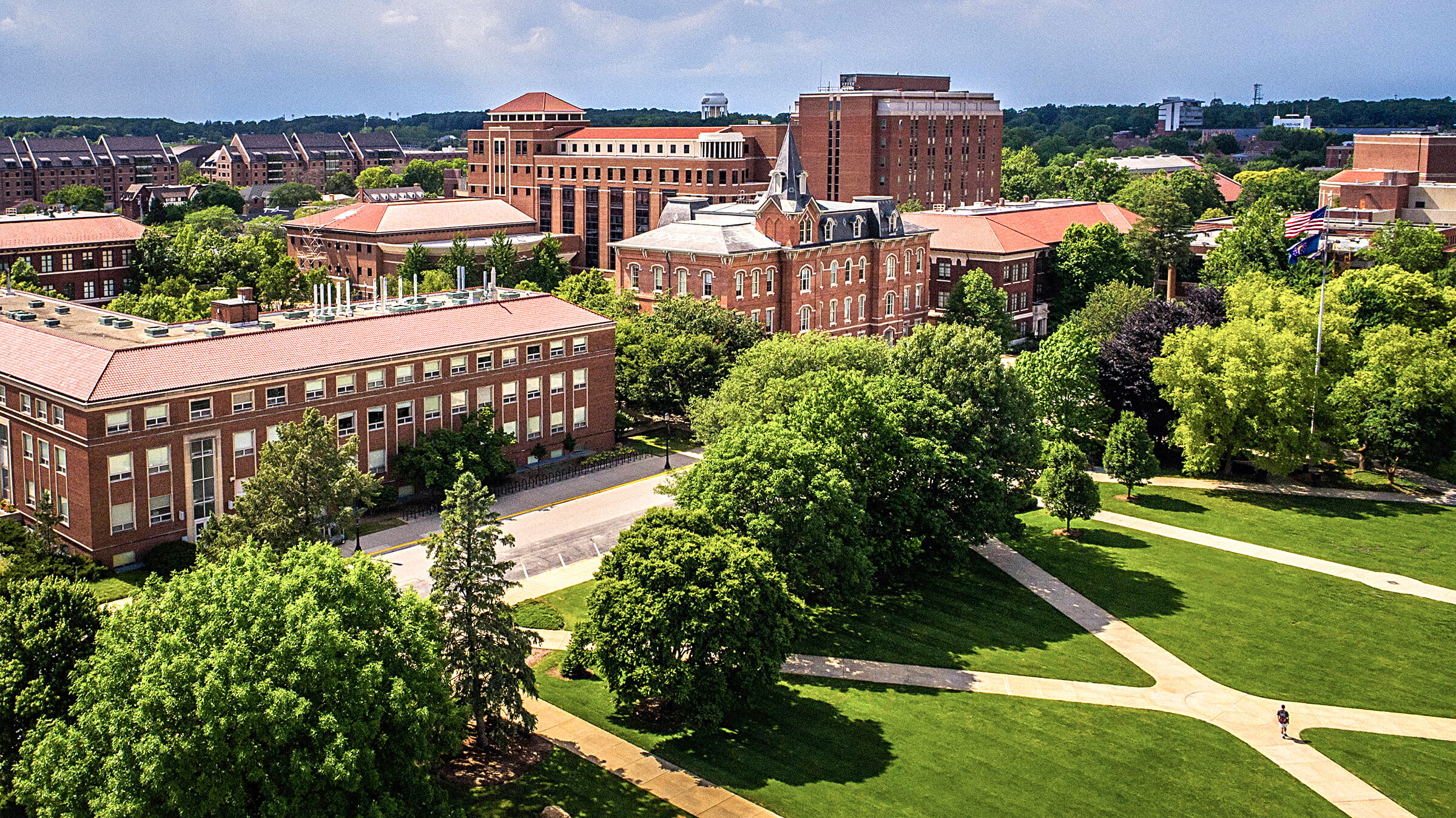
Here at Purdue University, the PETAL team has access to state-of-the-art research facilities to perform experimental research on supersonic flows. Led by Prof. Guillermo Paniagua, they try to find new and better ways of increasing the efficiency of current propulsion systems. I joined them in September with a grant from UPM for five months, and I am using this time to complement my experience in theoretical fluid dynamics and mathematical modeling with a more hands-on approach. In this project, I collaborate with Prof. James Braun to characterize the behavior of a supersonic flow inside a channel with wavy walls, since this has a direct application in a new concept of supersonic turbine that uses shock waves to extract energy from the flow.

I am Himpu Marbona, an early-stage researcher of Marie Skłodowska-Curie-SSeCoID project, currently doing Ph.D. at Universidad Politécnica de Madrid (UPM). One of the programs on the fellowship is a secondment at which the fellow visits other research groups for several months. I did my first secondment at Purdue University for 3 months where I joined Professor Guillermo Paniagua’s lab, which is called Purdue Experimental Turbine Aerothermal Laboratory or PETAL. The lab focuses on experimental research of the turbine section of aircraft engines.
They are doing state-of-the-art wind tunnel testing with sophisticated measurement techniques. In this collaboration, we tried to recreate and understand the physics they obtained in the hump experiment with our NUMATH’s group high-order computational fluid dynamics (CFD) solver. The motivation is to find a method to reduce the losses of turbine blades. CFD simulations give a deeper understanding of the physical phenomena than experiments as more data are available. The high-order solver tool has been developed in the UPM by NUMATH group of ETSIAE with the motivation to give more accurate simulation results. Outside work, living in Purdue or West Lafayette gave me a new experience of universities in the United States, their nature and culture.